While charities, foundations, philanthropic organizations, and other nonprofits tend to have employees and volunteers who strongly believe in their mission, they might not have the resources they need to make the most of their funds. At the same time, they do want to make sure that the organization is financially stable, and donors will want to know that their contributions are in good hands.
The National Council of Nonprofits notes that “the board of directors of a nonprofit has a fiduciary responsibility to protect the assets of the nonprofit and ensure that the assets are used to further the nonprofit’s mission.”

Nonprofits typically maintain a working capital fund for their routine expenses. These funds are fairly liquid and often kept in FDIC-insured savings accounts, money market accounts, and certificates of deposit (CDs) that they can easily convert to cash.
A nonprofit may also have a reserve fund that’s invested to provide additional revenue over the long term. That’s going to require an investment policy that identifies a nonprofit’s risk tolerance, its need for liquidity, and its long-term objectives. To meet these needs, many of them turn to professional wealth managers who have the kind of expertise that a nonprofit’s staff and volunteer board might lack.
Nonprofit wealth management in Bucks County requires making sound investments while avoiding unnecessary risks and keeping endowment management costs as low as possible. Trustees have a fiduciary responsibility to make sure they have the right nonprofit investment strategy that reflects the goals and ideals of their organization, while ensuring long-term sustainability. Working with an outside wealth management team can help you accomplish this.
Why Nonprofits Need a Wealth Manager
Financial planning for nonprofits requires an understanding of an organization’s goals, its tolerance for risk, plus state and federal regulations. Someone must also have a deep knowledge of investment strategies and the financial markets. Many nonprofits, endowments, and foundations may lack the level of expertise among their staff and volunteers to make the most of their investment options while avoiding unnecessary risks.
By working with a qualified wealth management team, a nonprofit can maximize its return on investments while the staff and volunteers focus on its core mission and fundraising. Having a professional asset management team can also help establish credibility with potential donors who agree with a nonprofit’s goals but want to make sure their contributions are properly handled.

Key Qualities to Look for in a Financial Partner
Finding the right wealth manager for your nonprofit is crucial to your financial longevity and success. It means working with a team that takes the time to understand the resources you have, your financial goals, and your tolerance for risk while offering a cost-effective approach to investing that maximizes returns while avoiding potential pitfalls. We recommend looking for the following qualities in a financial management team:
- Must be someone you can trust to recommend an investment based on what’s best for your nonprofit and has nothing to do with their own self-interests.
- Demonstrate the due diligence needed to understand your organization’s financial goals and the fiduciary responsibility of helping you meet those goals.
- Have experience working with similar organizations to yours, whether it’s a charity of a similar size, a foundation within the same area, or an endowment whose goals are similar to your own.
- Can offer a low-risk investment strategy, with full transparency about their decision-making process and the ability to adapt to economic and market fluctuations.
- Is an effective and open communicator who can build a strong relationship with your team through regular meetings, updates, and a willingness to answer questions.
- Understands and aligns with your organization’s values.
Understanding Your Organization’s Goals and Risk Tolerance
No doubt, everyone on your team understands your nonprofit’s goals in terms of the services it provides or supports, but could you and your team define your organization’s financial goals and its risk tolerance? It’s an often overlooked part of finding the right wealth management team, but it’s an important part of the selection process, even if it’s hard to define.
You might try analyzing your risk tolerance in terms of your organization’s objectives and how risk might impact your team’s ability to carry out their mission. The safest investments might offer less of a return, which could hamper your operations. Riskier options might offer a higher return, but only if they perform at an optimum level. Of course, there could also be time constraints involved, so you’ll need to make sure your nonprofit can afford to ride out the volatility that longer-term investments may have while hoping for greater returns.
It’s almost a cliché that “past results don’t guarantee future performance” because the phrase is repeated so often when talking about investing. That’s only because it’s true. Working with a wealth manager, your team should consider the many possibilities that your investments could offer in terms of potential risk and the rate of return, and how you would respond if your portfolio’s performance doesn’t turn out as expected.
Evaluating Experience and Fiduciary Responsibility
When considering your options for a nonprofit wealth manager, you might start by analyzing their credentials and qualifications. You could also ask for any customer testimonials or examples they can offer that demonstrate how they’ve helped similar organizations manage their investments and risks.
Do they function as an individual or as part of a team? This can be important, as a team can offer many benefits, such as having more than one contact and a smooth transition if your primary contact leaves or retires. A team can also oversee and evaluate each other’s work to make sure they’re providing the best advice and service to their customers.
Of course, your own team must also evaluate whether a prospective wealth manager understands numerous types of investments, their risks, and the potential rewards. This includes stocks, bonds, currencies, and commodities. They must not only have a deep understanding of the investments they recommend, they should also have a long-term and short-term view of the economy and the trends that could impact your funds.
A wealth manager must also take the time to understand whatever fiscal issues your organization faces and can offer solutions to help you overcome them, while also accounting for ways of meeting your short and long-term goals.
Comparing Fees and Investment Philosophies
After finding prospective managers for your investments, you could request proposals from each of them so you can get a detailed perspective on how they work and what they charge for their services. Things you may want to consider are:
- Their fees and any related costs to managing your investments.
- Their experience and any licenses, credentials, or certifications they have.
- What their onboarding process is for new clients, and how they would develop an investment strategy that meets your goals and aligns with your risk tolerance.
- How much time they’ll spend each month managing your account.
- Any statistics or examples they can offer of past success and satisfied clients.
- How they’ll communicate with your organization, and how often, regarding your investments.
Building a Long-Term Relationship with Your Advisor
The relationship between a wealth manager and a nonprofit is a long-term partnership that goes beyond the more traditional role of a bank and its customers. It’s one that helps a nonprofit with its financial management while adhering to its goals and vision. This requires open and honest communication about your finances and the performance of your funds. Your nonprofit and wealth management team should see themselves as forming a partnership where those involved are able to ask questions and receive answers.
How FNB Wealth Management Supports Nonprofits
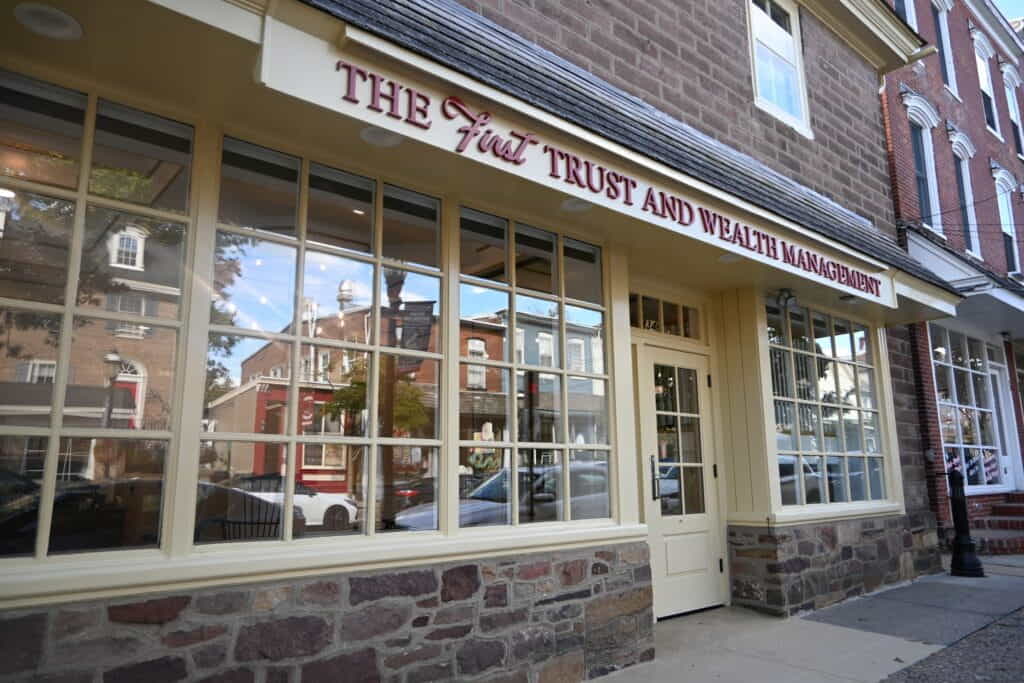
At The First National Bank and Trust Company, our wealth management team has decades of combined experience with several CERTIFIED FINANCIAL PLANNER® professionals who can work with you to develop a financial plan focused on long-term growth. We’re not traders who are playing the market and focused on short-term gains; we’re portfolio managers who focus on steady growth and diversification, while offering some of the lowest investment management fees available (and no hidden charges). As a community bank, we understand how important charities, foundations, and philanthropic organizations are to this region and want to see them succeed.
Schedule a Consultation to Get Started
To learn more about what wealth management can do for your organization and to explore financing options, please call us at 215-860-9100 or contact us online. You could also visit one of our 11 bank locations in Bucks County: Newtown, Newtown-Yardley, Warminster, Richboro, Jamison, Langhorne, Doylestown, Fairless Hills, Wrightstown, Washington Crossing, and Solebury.